Introduction: The Cloud Gateway Trap
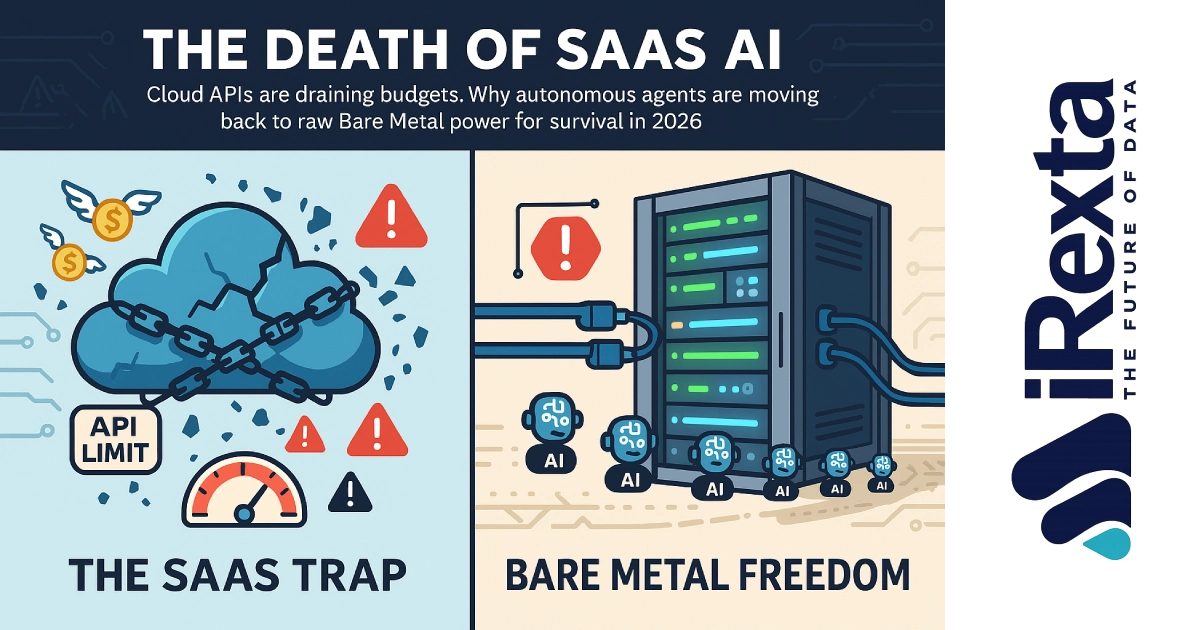
When enterprise teams attempt to optimize their skyrocketing LLM token costs, they usually reach for a managed AI Gateway (like Tetrate, Portkey, or Azure AI Foundry). The promise is simple: route traffic intelligently, set budgets, and prevent provider lock-in. But the reality is a brutal FinOps trap.
Many managed gateways charge a 5% platform fee on your total AI spend. If your company spends $100k, you are handing over $5k just to route traffic. Worse, if you host an open-source gateway inside an AWS VPC, every request leaving your private subnet to reach an external API (like Claude or OpenAI) gets hit with a NAT Gateway processing fee ($0.045/GB) and standard internet egress fees ($0.09/GB).
Elite engineering teams are abandoning this model. They are shifting to a self hosted llm gateway architecture built on top of CNCF-backed Envoy. In this guide, we will dismantle the cloud tax, explore Envoy's token-encoded routing, and prove why deploying on Dedicated Bare Metal is the ultimate Sovereign AI strategy.
Phase 1: Why Application Proxies Bloat & Envoy Scales
If you want to avoid managed SaaS fees, the immediate instinct is to deploy application-level proxies like LiteLLM. While fantastic for prototyping, application-level gateways written in Python introduce severe resource bottlenecks at enterprise scale.
- The Memory Cliff: While application-level gateways written in Python can scale horizontally via Kubernetes HPA, their per-pod memory footprint under heavy concurrent loads (2,000+ RPS) is massive. Scaling them out wastes expensive compute resources and risks cascading timeouts.
- The Envoy Advantage: Envoy AI Gateway operates at the true infrastructure layer. Written in C++, it handles 5,000+ RPS per pod with an overhead of just 11 microseconds, drastically reducing RAM overhead.
Phase 2: Tuning the Control Plane (The 25Mi Secret)
When you deploy the Envoy AI Gateway via the ai gateway open source github repository, you manage routes via Kubernetes Custom Resources (CRDs) like AIGatewayRoute and AIServiceBackend.
However, as you scale your enterprise routing to 2,000+ distinct AI routes, the system will hit a wall. The Envoy Gateway Control Plane communicates with the AI Gateway Extension Server via gRPC, and the default gRPC message size is strictly capped at 4MB. The xDS configuration payload for thousands of AI routes easily exceeds this limit.
To fix this, SREs must manually tune the configuration pipeline in the envoy-gateway-values.yaml with the correct indentation and syntax:
# Tuning the gRPC Configuration Pipeline for Massive Scale
extensionManager: resources: requests: cpu: "100m" memory: "256Mi" # SRE Fix: Bump gRPC limit to handle 2000+ AIGatewayRoutes maxMessageSize: 25Mi backendResources: # ... backend configuration details
By bumping the maxMessageSize to 25Mi, the gateway cleanly registers thousands of routes with a deterministic 5-second readiness latency, ensuring 100% stable inference routing.
Phase 3: Enforcing NIST Security & Governance
If your AI agents have the ability to execute tools (like querying databases or spinning up instances), routing is only half the battle. You must enforce model context protocol security best practices to prevent catastrophic data breaches.
According to the NIST AI Risk Management Framework (AI RMF) and recent NCCoE concept papers, relying on static service accounts for autonomous agents is a critical vulnerability. As agents spawn sub-agents (Multi-Hop Delegation), long-lived keys become untraceable and heighten the risk of privilege escalation.
Instead, use your AI Gateway to enforce Parameter-Level Authorization. Authenticate agents dynamically using SPIFFE/SPIRE or OAuth 2.0 (On-Behalf-Of) tokens. This ensures that every tool call is mathematically bound to a verifiable, short-lived identity, drastically shrinking the blast radius of prompt injection attacks.
The SRE Solution: Why Sovereign AI Demands Bare Metal
We have established that self-hosting the open-source Envoy AI Gateway solves the 5% SaaS tax, the Python memory bloat, and optimizes MCP statefulness. The final question is infrastructure placement: Cloud VMs vs. Bare Metal.
Running a high-throughput AI Gateway in a public cloud introduces the Double Encapsulation Trap. Cloud providers wrap your packets in their proprietary VPC overlays. When Envoy processes thousands of concurrent LLM streams over this virtualized network, MTU fragmentation occurs, spiking CPU usage and introducing unpredictable latency jitter.
Furthermore, as discussed, routing your traffic through NAT Gateways to reach external models bleeds your FinOps budget dry ($0.09/GB egress).
By deploying your AI Gateway and local open-source models (like Llama 3) on iRexta Dedicated Bare Metal Servers, you bypass the cloud tax completely. You gain unrestricted access to physical NVMe drives, Jumbo Frames (MTU 9000), and 100Gbps wire-speed networking. You pay a flat hardware fee, achieving true Data Sovereignty, 0% egress costs, and absolute architectural control.